

Industrial Battery Solutions
Powering Reliability For Indonesia’s Industry
PT Yuasa Industrial Battery Indonesia provides reliable industrial battery solutions engineered for critical power systems, backup applications, and industrial operations across Indonesia.
With Japanese technology, experienced technical support, and trusted GS Yuasa heritage, we deliver dependable energy solutions for a sustainable industrial future.
46+
Distribution Points Across Indonesia
50+
Years of Yuasa Industrial Battery Experience in Indonesia
500+
Industrial Battery Solutions
100%
Commitment To Reliable Power Solutions
Our Solutions

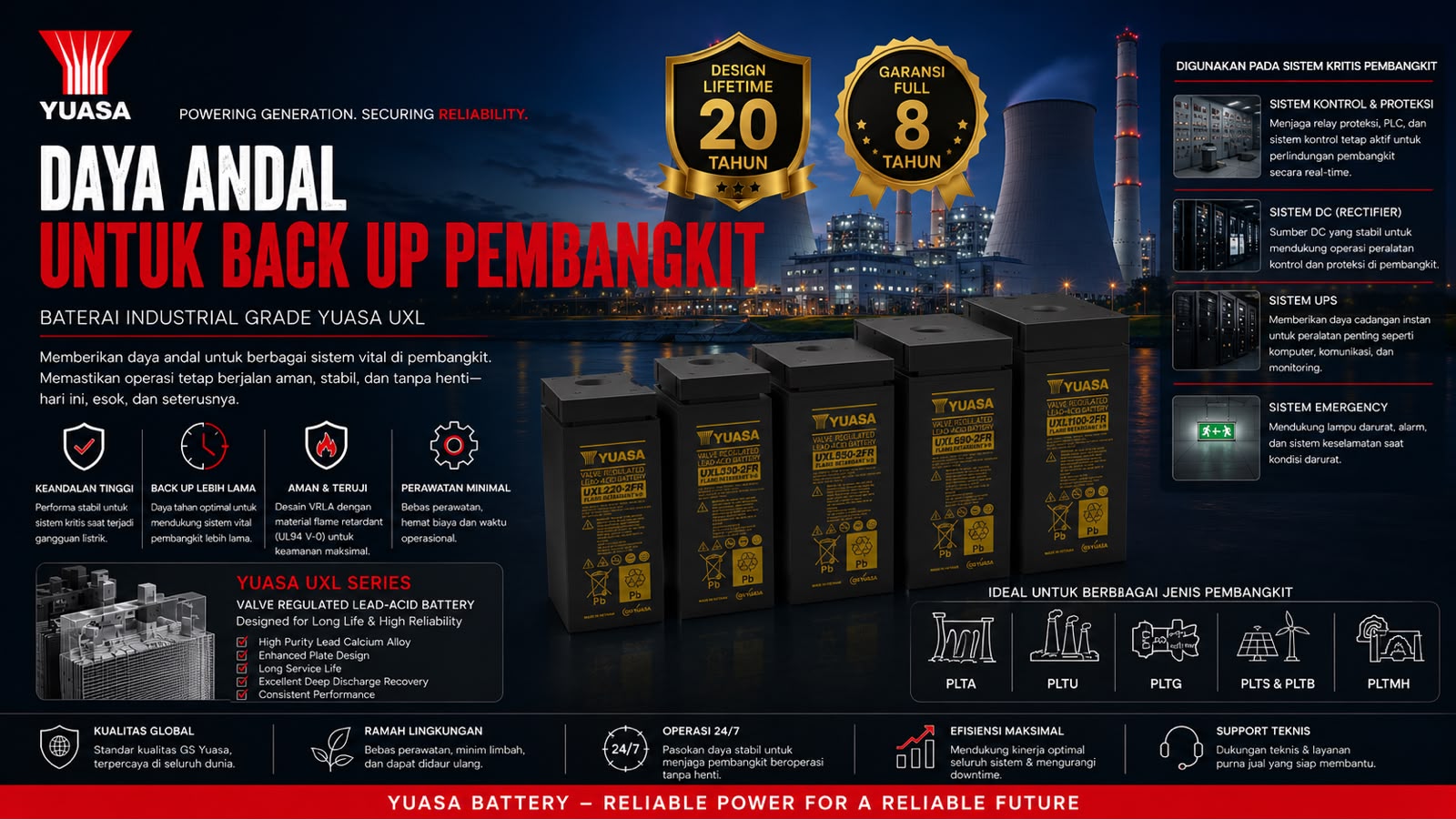
industrial battery (VRLA, VLA, NI-CAD)
Reliable industrial battery solutions engineered to deliver dependable backup power, long service life, and consistent performance for critical industrial applications.

Power Supply System
Complete power supply systems designed to ensure stable, uninterrupted, and efficient backup power for industrial facilities, utilities, and mission-critical operations.

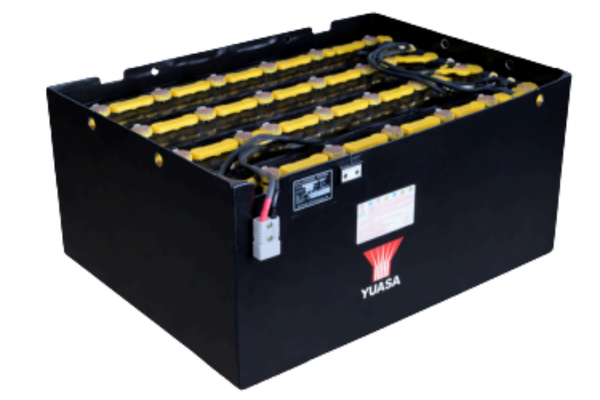
Traction Battery & Charger
High-performance traction batteries and charging systems built for electric vehicles and material handling equipment, providing efficient power delivery, durability, and extended operating life.
Sustainability
Committed To Reliable & Sustainable Energy Solutions
We provide advanced battery technologies that support industrial growth while maintaining reliability, efficiency, and responsible energy management.
We Follow Global Quality Standards
Powered by GS Yuasa technology and supported by experienced technical teams, YIBI delivers trusted industrial battery solutions with professional service and reliable performance.
- Japanese Technology
- Reliable Performance
- Professional Support
Supporting Industries Across Indonesia
Through our nationwide network and strategic distribution coverage, YIBI provides industrial battery solutions wherever your operation needs reliable power.
Our Industrial Applications
Backup Power System
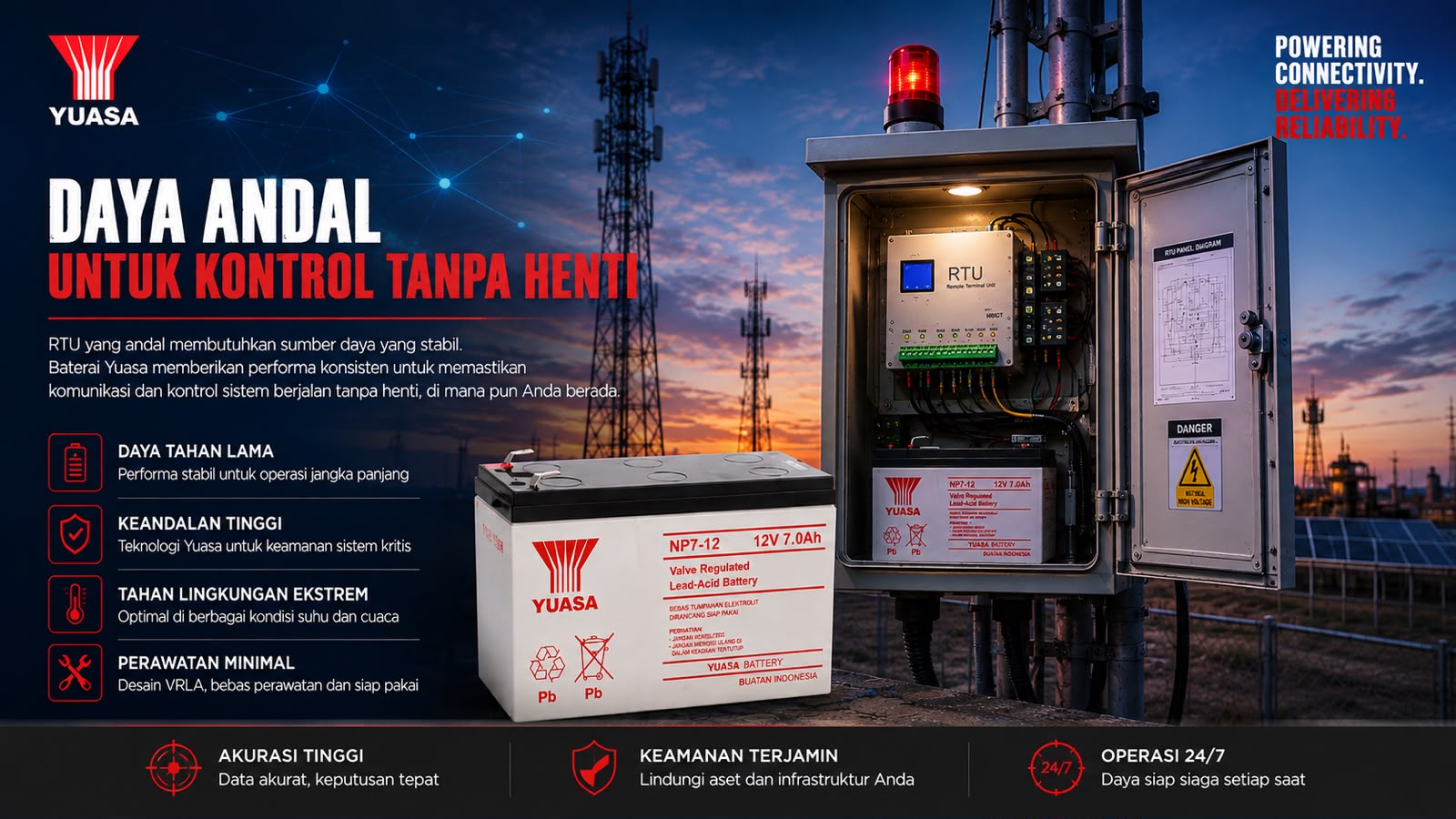
Telecommunication Infrastructure
Manufacturing Industry
Industrial Vehicle
Trust and Worth
Trusted Industrial Power Partner


Milestone
Siam GS Sales Co., Ltd.
GS Yuasa Siam Sales Ltd.
Established
Ready To Find The Right Battery Solution?
Build a reliable power system with PT Yuasa Industrial Battery Indonesia.
Learn More From
Frequently Asked Questions
(1) If the battery has been stored for a long time, please recharge the battery before using as the following below.
Stored temperature
Recharge period
Lower than 25°C- Every 6 months
Lower than 30°C- Every 4 months
Lower than 35°C- Every 3 months
Lower than 40°C- Every 2 months
(2) Please make regular check the battery. If there is any cracking, deformation, acid leakage or other damages on the appearance of the battery, please replace the new one.
(3) If the battery is covered with dust or dirty when checking, please use damp cloth with moisture to clean the battery. Do not use any organic solvent or detergent (on the cloth) like gasoline, etc. to clean the battery.
Thermal runaway means thermal accumulation rises both battery temperature and charge current when charging the battery, which would cause battery deformation and acid leakage.
Although lead acid battery is not on the load when storing, battery would leak electricity though internal chemical reaction that cause capacity loss, which is called ‘battery self-discharge’.
Sealed lead acid battery’s performance and operating lifespan are based on temperature 25°C, and ambient temperature affects the battery very well. Generally, every 10°C increase would shorten battery lifespan by 50% when temperature is higher than 25°C.
Capacity is related to discharge rate, higher current makes smaller capacity. e.g., 5HR capacity (C5) = 20HR capacity (C20) × 85%
Capacity is abbreviated as ‘C’, which is showed by ampere-hour (Ah) that multiplies discharge ampere (A) by discharge hour (h). Rated capacity is defined to 20 hour-rate (20HR), which is abbreviated as ‘C20’.
When the battery is charging, it can make water by reacting oxygen generated by positive plates with active materials rapidly, which can prevent water loss and perfectly seal. Here is the figure below:
Over-discharge: When the battery is discharging lower than final discharge voltage, it would decrease battery capacity and deteriorate the battery.
Over-charge: When the battery keeps charging even which is full-charged, it would decrease battery capacity and deteriorate the battery, too.
Charged electricity (AH) = Discharged electricity (AH)
DOD is the abbreviation of Depth Of Discharge. When the battery has reached specific voltage and time during certain discharging rate, DOD is 100%. For another example, when the battery has reached specific voltage and 1/2 period of time during certain discharging rate, DOD is 50%.
Standby use: The battery is the emergency power source that supplies suddenly blackout. e.g., emergency lights, UPS, communication devices, other backup power supplies, etc.
Cycle use: The battery is the power source on a regular basis. e.g., electric tools, notebooks, smartphones, etc.
Battery capacity is based on room temperature (25°C) and it would be affected by different temperature. Higher temperature makes greater capacity; However, lower temperature makes smaller capacity.